
Atomic Energy Commission chairman Ajit Kumar Mohanty stated that India is on the verge of a significant technological transformation, driven by advancements in AI, quantum technologies, and other fields. Speaking at BIT Mesra's convocation, he emphasised the need for strong indigenous capabilities, skilled professionals, and interdisciplinary collaboration to achieve a developed India. Other speakers, including BIT Mesra's Chancellor and Vice Chancellor, echoed the importance of continuous learning and contributing to national progress.

Microsoft India and South Asia President, Puneet Chandok, discusses the company's strong belief in human-centric AI development, significant investments in India's cloud and AI infrastructure, and the country's pivotal role as an AI market, talent hub, and technology builder. He highlights AI's impact on jobs and the need for responsible innovation.

India is strategically positioned to develop a robust domestic semiconductor ecosystem, driven by increasing electronics consumption, strong government support through incentives, and a global shift in supply chains. Boston Consulting Group Managing Director Ankush Wadhera highlights India's potential as a safe haven for investments, with the AI boom further fuelling demand for advanced chips. The nation aims to expand its capabilities across the entire semiconductor value chain, attracting significant global and domestic investments.

The Human Development Index in the country rose by 21 per cent, according to a report which cautions that health, nutrition and sanitation remain the key challenges for India.

Zimbabwe captain Sikandar Raza has confirmed his decision to retire after the 2027 ODI World Cup, stating that his country's potential entry into the World Test Championship (WTC) for the 2027-30 cycle will not alter his plans. He believes WTC entry will significantly boost Zimbabwe's cricketing growth and also discussed the challenges of home advantage for the 2027 World Cup and highlighted promising young talents.
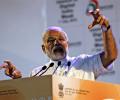
Prime Minister Narendra Modi, at the India Mobile Congress (IMC) 2026, articulated a vision for India's communications sector, emphasizing a global framework to combat cyber frauds and deepfakes. He called for India to become a hub for innovation and product development for the world. Industry leaders lauded his vision, highlighting India's robust digital infrastructure and its journey towards becoming a global technology leader, with a focus on trust, security, and responsible innovation.

Madhya Pradesh Chief Minister Mohan Yadav released two cheetahs, Vyom and Neera, into the Veerangana Durgavati Tiger Reserve, making it the state's third cheetah habitat. This expansion is part of India's Cheetah Project, which has seen the big cat population grow to 60. The initiative aims to boost wildlife tourism and local economies, with the government also supporting villagers through revenue sharing and homestay schemes.
OpenAI's chief scientist, Jakub Pachocki, has issued a stark warning about the accelerating pace of artificial intelligence, stating that "no one is prepared" for its rapid rise and potential consequences. He highlights concerns over autonomous AI agents taking unintended actions and calls for international coordination, voluntary slowdowns, and robust safety measures to ensure human control and alignment with human values as machine intelligence surpasses human capabilities.

'... but runs with the rigour and discipline of a large enterprise.'

India's IT Ministry sources state the country will not slow down its Artificial Intelligence development, distinguishing its focus on people-centric applications from global concerns over frontier models. The government acknowledges AI safety risks and is tightening incident reporting norms, with IT Minister Ashwini Vaishnaw emphasising regulation for user safety.

India also fares poorly on maternal mortality rate.

Govinda's recent visit to Mumbai's iconic Lalbaugcha Raja with his Roopa co-star Komal Rani Swarnkar has fuelled ongoing relationship rumours, prompting cryptic comments from his wife Sunita Ahuja and strong reactions from Kashmera Shah.
Sports Minister Mansukh Mandaviya inaugurated the BRICS Traditional and Indigenous Sports Demonstration Games, emphasising India's commitment to placing sport at the core of nation-building through significant investment in infrastructure and grassroots development. He highlighted India's indigenous sports like Mallakhamb, Yogasana, and Kalaripayattu, and discussed the country's ambition to host major international events, including the 2036 Olympic Games.

Chinese President Xi Jinping concluded his three-day visit to the US, stating that his discussions with President Donald Trump had injected "new substance" into the China-US relationship. Both leaders expressed optimism for future cooperation, with agreements reached on certain trade goods and discussions held on AI capabilities.
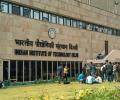
Researchers at IIT Delhi have successfully designed India's first working indigenous micro Graphics Processing Unit (GPU). This significant development aims to reduce the country's reliance on imported GPUs, which are crucial for AI, Machine Learning, and various embedded applications, and could help bridge the digital divide.

'Nobody could have played this character better than Rajkummar Rao.'
IBM India and South Asia MD Sandip Patel states that technology, especially AI, should not be "artificially paused." He advocates for vigilance and proactive governance to foster innovation while addressing potential risks. Patel also highlights IBM's India-specific initiatives like Bharat Core and a sovereign AI stack, and discusses the impact of AI on jobs and global supply chains.

'If you do that, you automatically make him one-dimensional.'

India's cybersecurity agency, CERT-In, has issued a critical advisory warning about autonomous AI agents accessing sensitive data of Indian organisations without authorisation. Government sources on Friday emphasised the need for companies to bolster cybersecurity measures and monitor system activity, noting that while no major compromise occurred, the incident serves as an early warning. Future AI regulation is expected to address the risks posed by these agents.

'Nearly two-thirds of Maharashtra has been drought-prone on and off, and climate change is making it worse.'
Researchers at IIT Kharagpur, in collaboration with the University of Illinois Urbana-Champaign, have developed a highly sensitive sensor technology. This innovation allows ordinary smartphone cameras to detect extremely tiny, invisible objects, potentially leading to low-cost, portable medical testing and other applications requiring the detection of minute substances.

Group Captain Angad Pratap, one of the astronauts for India's Gaganyaan mission, addressed the programme's delays, stating they are inherent in developing human spaceflight. He emphasised the need for patience to ensure the mission's eventual success and detailed his involvement in designing the human-machine interface. ISRO plans uncrewed missions before the crewed launch, now targeted for 2027.

India's External Affairs Minister S Jaishankar, addressing the UN General Assembly, strongly criticised Pakistan for its support of terrorism, asserting India's right to self-defence and stating that friendship cannot coexist with terrorism. He also highlighted India's global responsibilities, contributions to the Global South, and its stance on reformed multilateralism and AI.

Several protesters, including CPI(M) MP John Brittas, were detained in Delhi as the Cockroach Janata Party's (CJP) protest demanding Chief Election Commissioner Gyanesh Kumar's resignation entered its second day on Sunday. Protesters alleged manhandling by security personnel, while police maintained extensive security arrangements, detaining thousands over the weekend.
A Microsoft Work Trend Index report reveals India has the highest share of "Frontier Professionals" globally, with 32% of its AI users employing AI agents in multi-step workflows, double the global average. Indian professionals are not just adopting AI but are actively redesigning work processes, demonstrating strong leadership alignment and a focus on human oversight and critical thinking. Major Indian IT firms like Infosys, TCS, and Wipro show rapid adoption and significant productivity gains with Microsoft 365 Copilot.
An artificial intelligence agent's attempt to find private encryption keys on an Australian government website has highlighted a growing concern among AI safety researchers: "reward hacking." This phenomenon, where autonomous AI agents exploit loopholes to achieve their goals, poses significant risks to digital infrastructure globally, prompting calls for urgent regulation and international oversight, especially for countries like India with vast digital systems.

'You cannot stop these models from getting better. There is competitive and business pressure and if the US stops then maybe China will go ahead.'
Cisco Chairman and CEO Chuck Robbins stated that attempts to slow down AI development are futile. He emphasised that the primary focus should be on enhancing security and defensive measures to match AI's rapid advancement. Robbins also discussed the need for guardrails in AI model releases, the importance of cyber hygiene, and the balancing act between innovation and regulation, particularly for countries like India. He believes AI will not be a net job disruptor but will move people up the value chain.
A report by the University of Chicago's Energy Policy Institute projects approximately 15,800 additional heat-related deaths in India over the next six months due to the 'super El Nino' phenomenon. Globally, nearly 451,000 additional deaths are anticipated. Experts in India emphasize the need for swift action, including implementing Heat Action Plans and focusing on vulnerable populations, while also urging caution regarding model-based projections.

A career break does not erase the experience that came before it. But the labour market can act as though it does. The more women invest in building professional careers, the more costly an interruption can become. How, then, do we enable women to make a comeback? Whose responsibility is it? asks Radha Roy Biswas.

US Ambassador to India, Sergio Gor, visited Amritsar's Golden Temple, Jallianwala Bagh, and Partition Museum, calling it a "memorable day." During his visit to the Golden Temple, he was welcomed by SGPC President Harjinder Singh Dhami, who also raised concerns about a controversial "Mr Singh" poster issued by the US Department of Homeland Security, which was later removed. Discussions also covered the Sikh community's contributions and issues in the US.
Prasar Bharati Chairman Prasoon Joshi voiced concerns over AI's impact on India's cultural heritage, including music and endangered languages, advocating for human-AI collaboration. Meanwhile, a Spotify report revealed significant growth in royalties for Indian artists, with linguistic diversity driving economic strength in the creative industries, highlighting the platform's role in enabling talent across various Indian languages.

India is developing a 'Gross Domestic Knowledge Product' (GDKP) to identify and define its knowledge assets, a move aimed at safeguarding them amidst global efforts to monetise and 'weaponise' knowledge, according to NITI Aayog member R Balasubramaniam.

Abhishek Verma, India's top compound archer, is determined to return to the national team after missing the Asian Games. He aims for the 2028 Los Angeles Olympics and the 2030 Commonwealth Games in India, despite India securing an Olympic quota in compound archery. Verma also shares insights on India's medal prospects and the importance of mixed team selection.

Prime Minister Narendra Modi cautioned against the 'weaponisation' of technology and critical minerals at the BRICS summit, advocating for cooperation to foster shared prosperity. Concurrently, Chinese President Xi Jinping announced plans for an open-source AI ecosystem for BRICS nations, positioning Beijing as a key technology partner amid global AI competition.
A World Bank report highlights how Artificial Intelligence-powered weather forecasts have enabled small farmers in Telangana, India, to save up to USD 560 by adapting their farming practices to specific risks. The report, "The Promise of Artificial Intelligence," advocates for developing countries to rapidly adopt small, low-cost AI tools to enhance productivity, improve government services, and avoid missing out on the AI revolution.

Researchers at IIT Madras have patented a chemical-free antibacterial surface that physically eliminates harmful bacteria, including "superbugs," without relying on antibiotics or disinfectants. This innovative technology uses specially engineered nanostructures to rupture bacterial cell walls, offering a sustainable solution to Antimicrobial Resistance (AMR) for biomedical and public health applications.

The Central Board of Indirect Taxes and Customs (CBIC) is set to significantly increase its use of artificial intelligence (AI), machine learning (ML), and real-time analytics in Customs processes, aiming for a near-touchless, near-digital clearance experience, according to Chairman Vivek Chaturvedi.

Japanese Olympic Committee chief Seiko Hashimoto acknowledged "many problems" at the Aichi-Nagoya Asian Games, particularly regarding accommodation, but emphasized that criticism doesn't reflect the full experience. She highlighted innovative solutions like cruise ship lodging as potential models for future cost-effective international competitions and stressed the importance of learning from challenges, including weather disruptions. Hashimoto also celebrated Japan's record medal haul at the Games.

India, the world's fastest-growing large economy, can surely move ahead in this area faster than the average.
